
Hempstead Address Records Sources
One address leaves several kinds of traces. The Nassau assessment roll and parcel map establish the current parcel and its section, block, and lot, often called an SBL. The County Clerk's recorded-document index then provides a chain of transfers. Directories and census schedules help with households, while permits can date physical changes. None of these sources alone proves every person who lived at a property.
| Source | Years it covers | Where held | What it shows |
|---|---|---|---|
| Nassau Land Records Viewer | Current roll and parcel display | Nassau Assessment online and counter | SBL, situs, assessment context, districts, maps, and current listed owner |
| County Clerk land records | Live online range not published | US Land Records and County Clerk counter | Grantor, grantee, dates, document number, legal description, and image route |
| Historic official records | 1840-1982 | Nassau Historic Official Records | Historic recorded-document search route |
| Directories and reverse directories | Title and shelf dependent | Hempstead Library and Nassau Library System | Historical household and address leads when a volume is confirmed |
| Federal census | 1790-1950 generally released | NARA, library databases, and genealogy collections | Household composition at a census date |
| Town permit files | Historical range not published | Online Permit Center, Building Department, or FOIL | Addressed application, status, inspection, and project clues |
For recent history, begin with the parcel and recorded deed. For an older household question, use a verified directory or census year after the legal parcel identity is known. When the online route ends, the research points to the historic portal, County Clerk counter, microfilm or deed books, and library staff rather than an invented all-online cutoff.
Hempstead Address History Parcel Start
The Nassau Land Records Viewer is the practical first stop for past residents research. Search by address or SBL, then preserve the parcel identifier, situs address, current assessment owner, mailing address when shown, roll year, district information, photographs, tax and exemption context, and map link. A situs address identifies the land. A mailing address is where correspondence goes and is not proof that the listed recipient lives at the property.
Record the SBL exactly, but reconcile it in the Clerk's system. Nassau's assessment and Clerk databases can use different SBL placeholders. That local quirk makes the legal description and parcel details essential when an address has changed, a lot was subdivided, or a search returns a near match. The public map is a locating aid, not a substitute for a recorded deed or survey.
Note: Compare the situs address, mailing address, and recorded grantee rather than treating any single display field as an occupancy record.
Hempstead Previous Residents Deed Chain
The recorded deed chain is the core ownership trail for an earlier Hempstead address history. Search the Nassau County land-record index by the current grantee or owner and by the legal description or SBL. An acquisition deed identifies a grantor, the party conveying an interest, and a grantee, the party receiving it. Treat the grantor as the next historical person to investigate, while keeping the same lot identity in view.
- Open the current Land Records Viewer result and write down the SBL, roll year, situs address, listed assessment owner, mailing address, and legal-description clues.
- Find the acquisition deed in the County Clerk index. Preserve the grantor and grantee, document type, instrument and recording dates, document number or book and page, consideration when shown, and image availability.
- Search the prior seller as a grantee, using the legal description or SBL to guard against a different property with the same street number.
- Repeat backward. Pause when an estate, trust, corporation, subdivision, merger, or mortgage satisfaction changes the name trail.
- Use plats or subdivision maps to test lot continuity, then move to the historic portal, counter, microfilm, or deed books if the online record range no longer reaches the needed period.
- Grantor and grantee
- The grantor conveys an interest in a document; the grantee receives it.
- Chain of title
- The sequence of recorded transfers for the same parcel, traced from one holder to an earlier one.
- Legal description
- The lot or parcel wording used in land records. It is often steadier than a street address in older research.
Open the Nassau deed-index search to begin that recorded-document review.
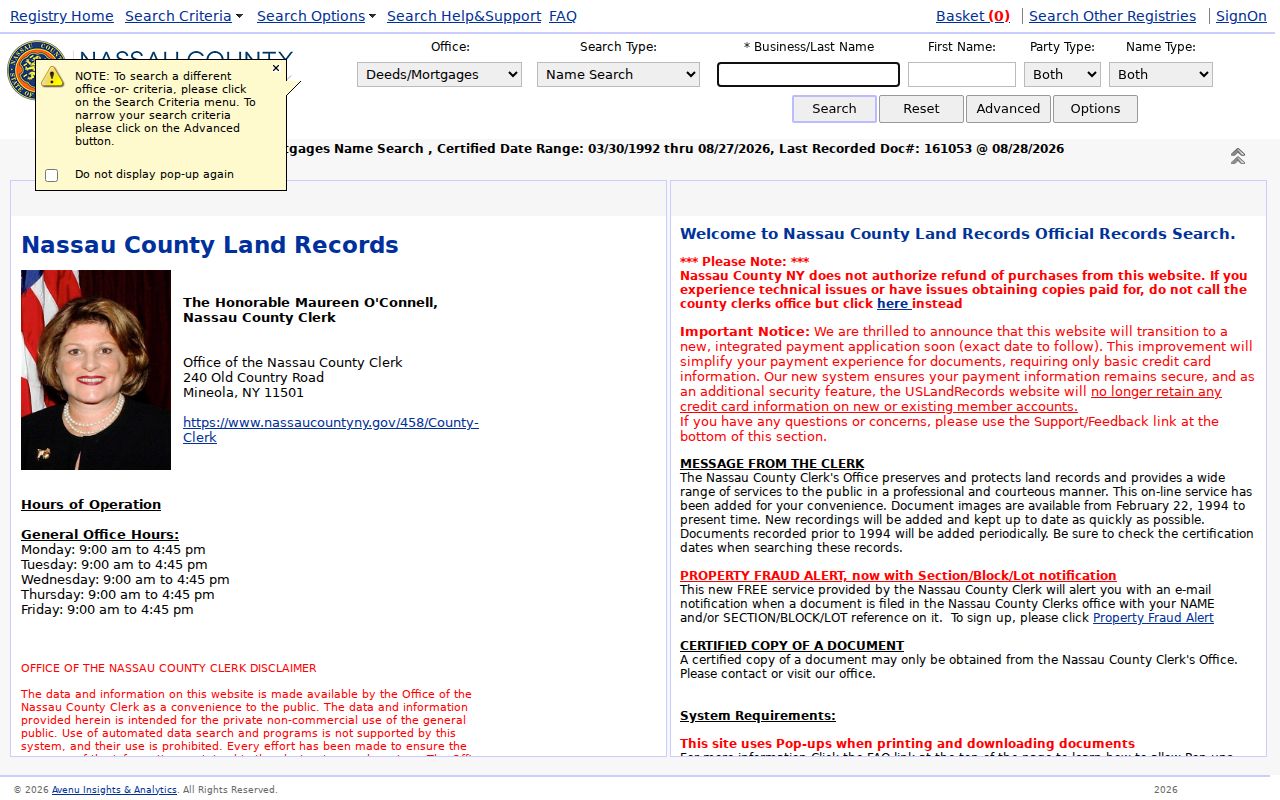
The index helps preserve the party names, dates, and document placement needed to build a trail without guessing from a street name alone.
Historic Hempstead Address Records
The Nassau Historic Official Records landing page expressly covers 1840 through 1982. It is a separate historical access route, not proof that every deed image is online back to 1840. The live County pages did not publish a single imaging transition year for every record series, so a careful search keeps the historic portal, counter, and physical sources in the fallback path.
Town records and County Clerk records are also distinct. The Town Clerk archive statement reaches to records dating from 1644, while the historic official-record page identifies its own 1840-1982 coverage. The two facts should not be merged into a claim of continuous or complete digitization.
Use the historic official-records landing page when the current index does not reach far enough.
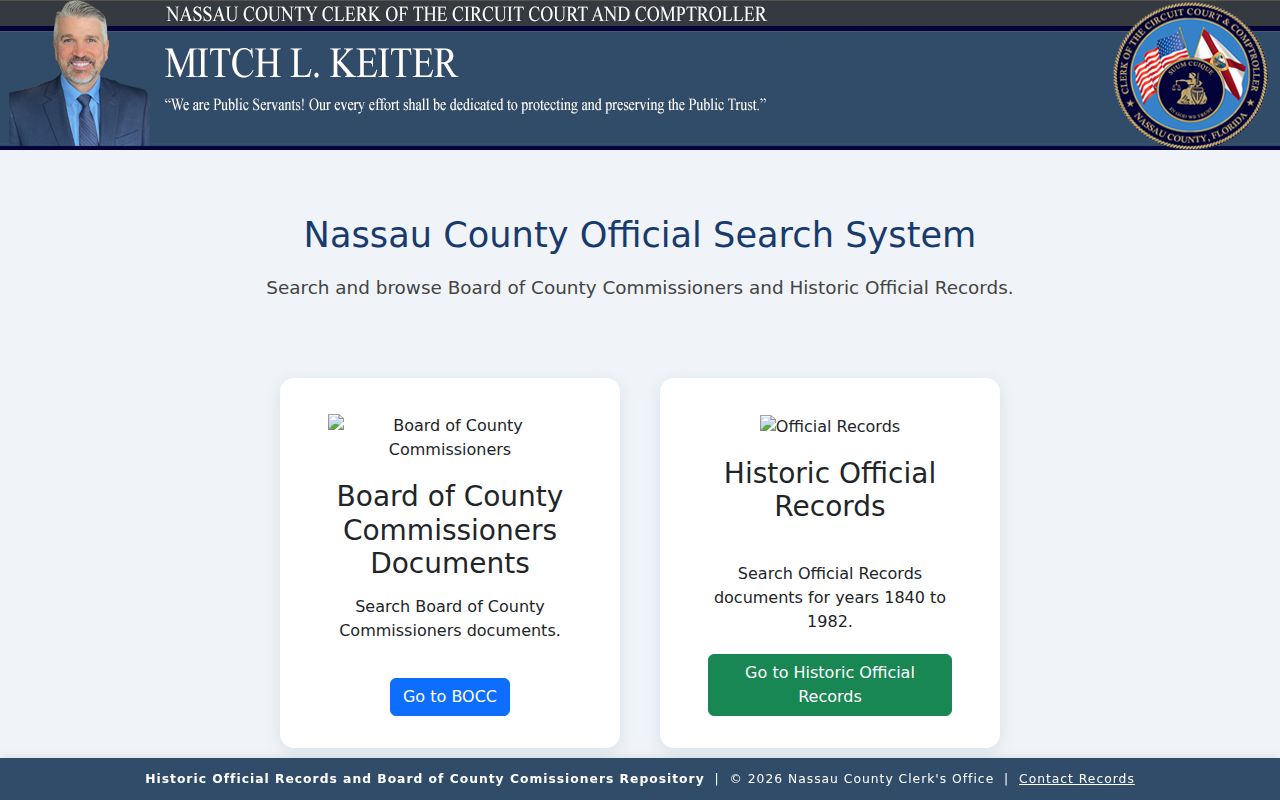
The separate historic portal makes it clear that an address history may require more than the current online deed-index interface.
Note: Historic coverage identifies a search route, not an assurance that every record or image is available online.
Hempstead Address Records Map Layers
The Nassau GIS viewer includes parcel and lot information, aerial imagery, FEMA flood zones, and historic Nassau County layers for 1926 and 1950. Compare an older road or building footprint with a current parcel, then carry the parcel identifier into the Land Records Viewer and Clerk index. Those layers can help locate a property through street changes or subdivision history.
Use the Nassau GIS map viewer for the visual comparison, but keep its limits clear. A map can help identify the parcel polygon and address, while the legal description, plat, and recorded document establish the land-record connection.
Hempstead Address Records Permit Trail
Permit records can add dates to a house history even when an old directory is unavailable. The Town Building Department's Online Permit Center may show addressed applications, status, inspections, and documents where public. Older files can require a Building Department request or a New York Freedom of Information Law request. The research did not verify a complete historical permit index or a coverage start date.
Coastal parcels have a more specific recent trail. From January 24, 2025, structures-in-waterways permits, including bulkheads, use the Town's OpenGov process. A submitted packet can require a survey, deed, recent tax bill, drawings, photographs, owner affidavit, and NYSDEC approval. A dated permit can show when a physical change was processed, but it does not establish every person who lived there.
Note: Permit files can date an application or change, but they should be tested against deeds and parcel records.
Past Households in Hempstead
Ownership is only one part of an address history. A verified city directory or reverse directory can offer household and address leads, while census schedules can test who was present at a given census date. The collection details belong to the Hempstead city directories, which is the better place to confirm a particular title or shelf run. No official source reviewed identified a complete local reverse-directory span.
- Begin with a directory title whose place and year are verified, then copy the full printed entry and any abbreviation key.
- Check another available directory year for changes in initials, surname spelling, spouse notation, and address.
- Use a reverse or address section when the volume contains one. If it does not, compare nearby entries by street and neighborhood.
- Pair the result with the nearest released federal census, taking Queens-before-1899 and Nassau-after-1899 jurisdiction names into account.
- Use a deed, obituary, probate record, or naturalization petition as an independent check before treating a household connection as confirmed.
The Library of Congress city-directory guide describes a national collection primarily covering 1861-1960. That is a guide to titles and reels, not a statement that a Hempstead volume exists for every year.
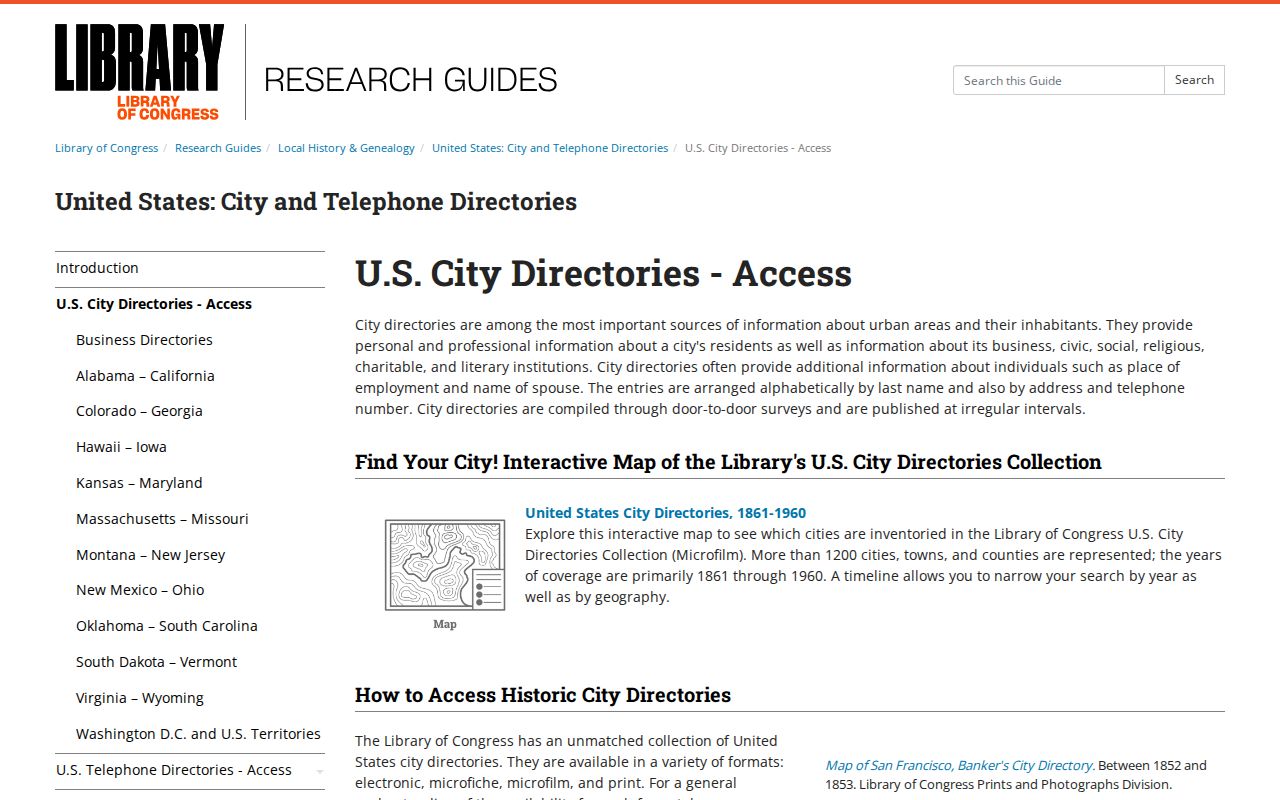
Directory and census material can fill intervals between property transfers, but each matching household needs independent support from the record trail.
Lawful use. Hempstead house-history research is for personal, family, estate, and historical purposes. Do not use an address trail to stalk, harass, or harm any living person.
Hempstead Address History Naturalization
Nassau naturalization records can bridge a historical address gap. The County Clerk collection covers people who applied for or received citizenship through 1983 and has a volunteer computer index created with the Italian Genealogy Federation of Long Island. A declaration can include an address, birth place, travel details, signature, and filing date. A petition can add spouse, children, and witnesses with addresses.
The naturalization request form permits surname, given name, volume, petition number, and optional address-at-petition details. It states a $5 fee, requires a self-addressed stamped envelope, and estimates a four-to-six-week mailed response. Staff handle the original books because of age and condition.
Hempstead Library links to genealogy databases, digitized yearbooks, special collections, and historic photographs. Ask the library database desk for material that can test a name, class year, neighborhood, or local obituary date without assuming the online list is complete.
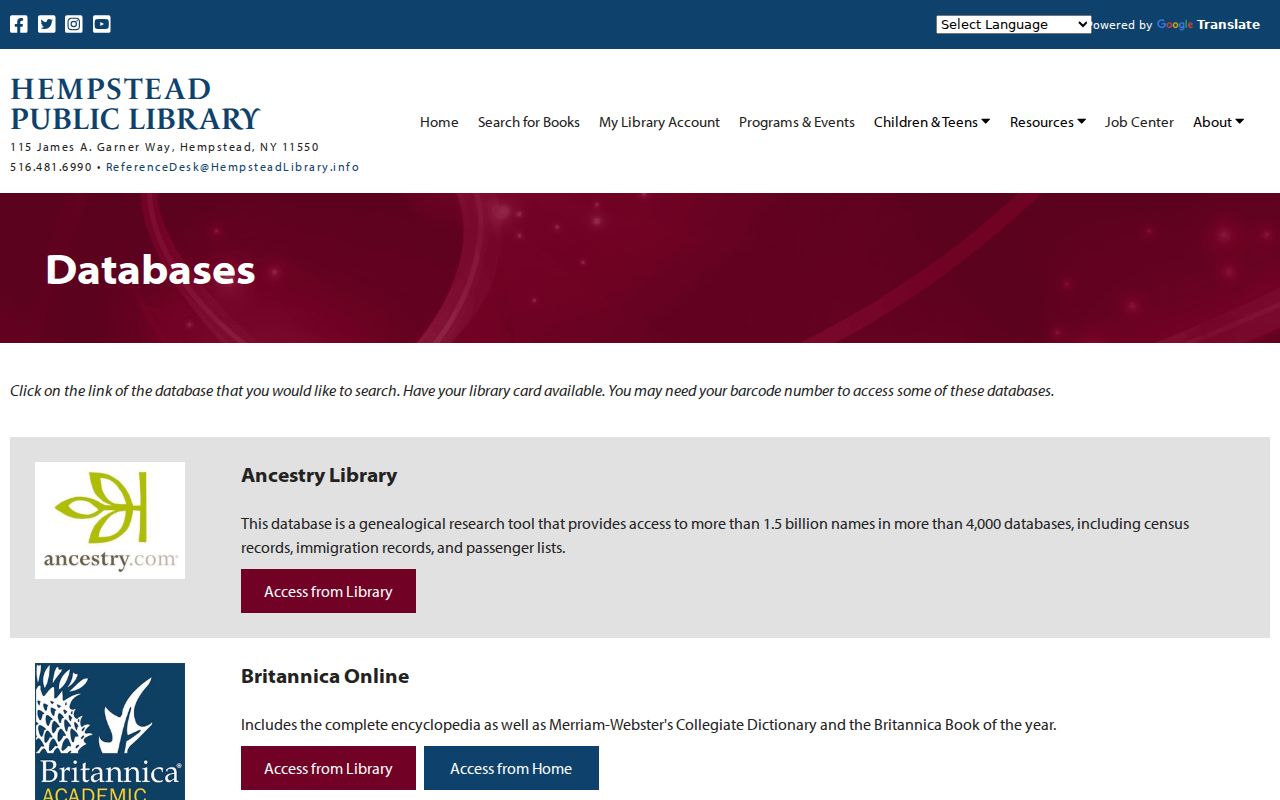
Library material supplies context for a historical family or neighborhood. It should be matched against recorded land and dated household sources.
Hempstead Previous Residents Death Endpoints
An obituary, cemetery request, probate file, or eligible vital-record request can help close an address trail after a resident dies or leaves the property. New York genealogy access generally begins after 50 years for death records and marriage records when both spouses are deceased, and after 75 years for a birth record when the person is known deceased. Certified copies have stricter eligibility than a genealogy index or an uncertified historical copy.
The state genealogy fee schedule is based on the search span, and the researched guidance says processing may take eight months or longer. A direct local registrar request can be faster when the municipality is known. For probate, the Nassau Surrogate's Court and its clerk handle case information and filings, with sensitive material subject to control or redaction.
Consult the New York State vital-record genealogy page for the official access rules and current forms.
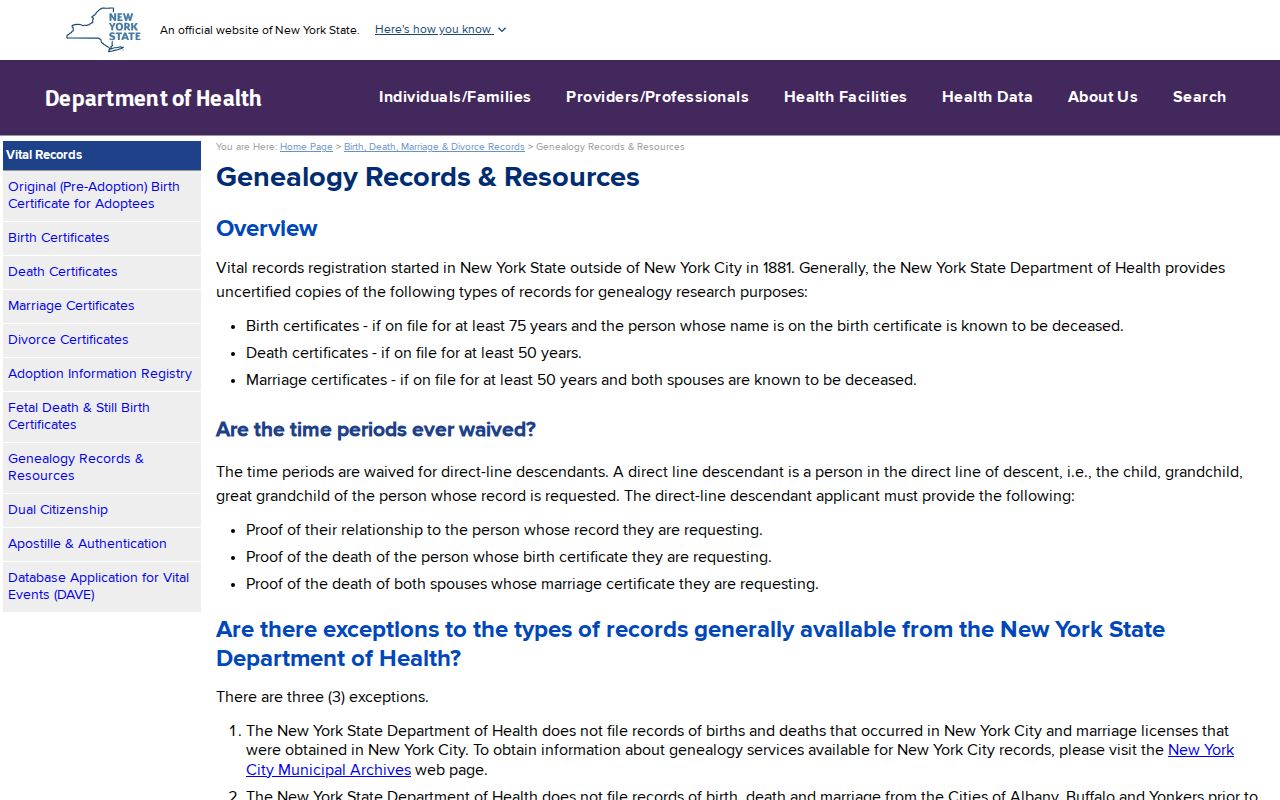
Vital records can provide a date and family-history lead, but they do not replace a deed, directory, or census record for an address-specific conclusion.
Note: A genealogy result may supply a lead, while certified copies remain subject to separate eligibility rules.
Hempstead Address Records Counter Route
Online search is only one access channel. The County Clerk says property information can be searched online or at Room B-1, but staff cannot supply it by phone or email. Carry a printed parcel or SBL plus a name and date range to the counter. Tax-map copies are available at the assessment counter from 9:00 a.m. to 4:30 p.m., according to the research.
For collection leads, the Nassau County Historical Society has documents, books, artifacts, writings, and a journal. Founded in 1915, incorporated in 1920, and permanently chartered in 1958, it is a useful holdings and programs lead. It says it cannot fill genealogical research requests, so use it to identify sources rather than as a personal lookup service.
Visit the Historical Society holdings page for its public programs and collection context.
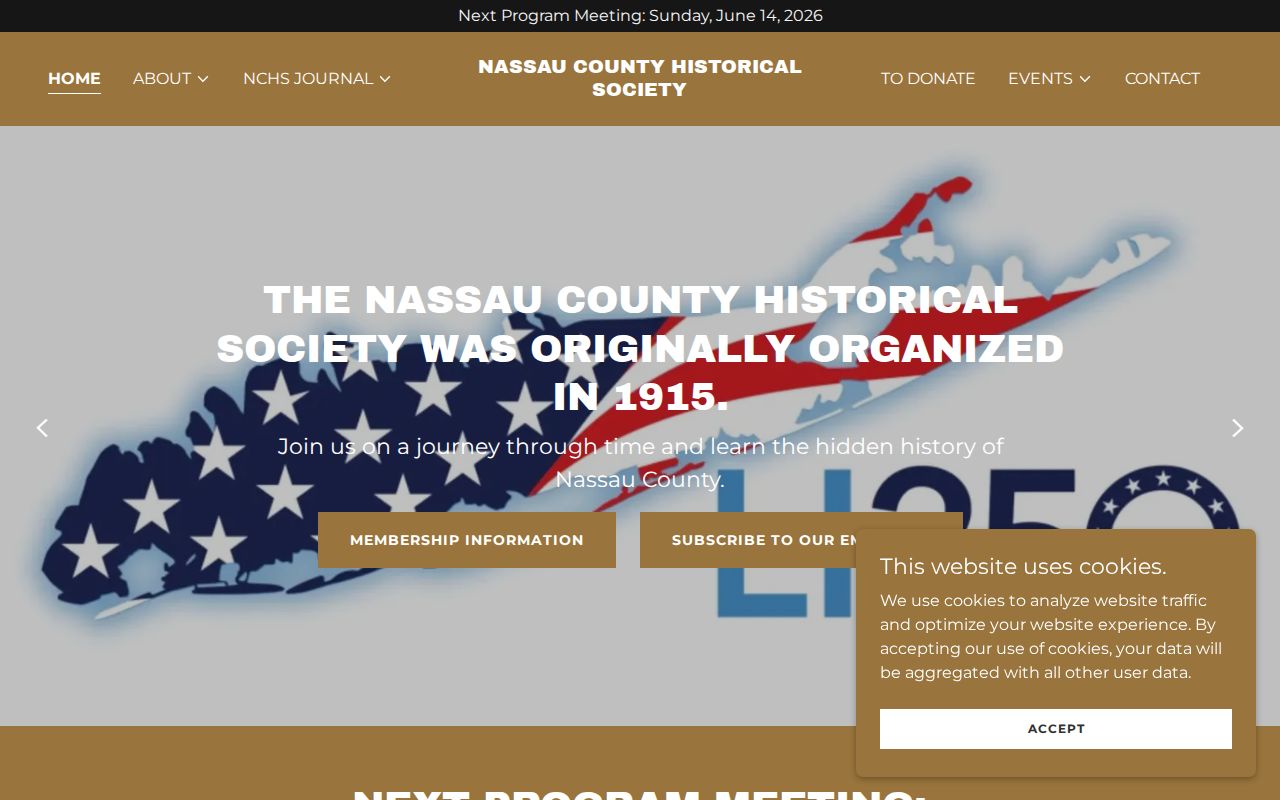
When a gap remains, a library shelf, archive, counter record, or a records request can be more useful than repeating the same online search.